Amid Lights and Logistics: The Season That Separates the Ready from the Rest
As the glow of Diwali lights up every street, it also ignites a frenzy behind the scenes — warehouses running


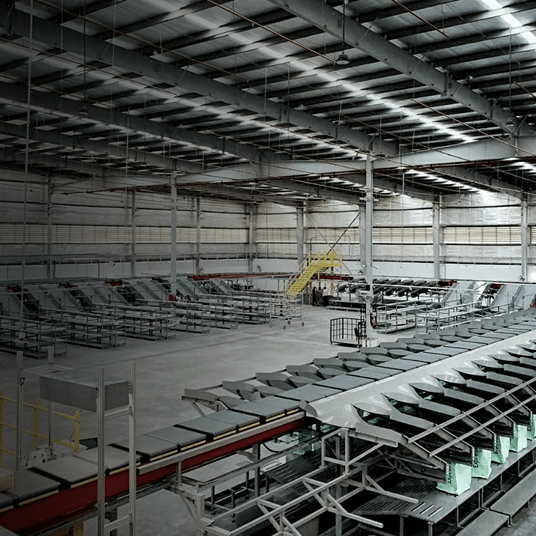
Across the world, intralogistics is moving through a decisive transformation. Warehousing is no longer a silent operational function hidden behind factory walls —it has become a strategic engine shaping customer experience, cost competitivenessand supply chain resilience. Businesses across the global are confronting the same realities: rising expectations, labour constraints, space limitations and an urgent need for smarter, faster, more adaptive systems.
The next decade will not belong to warehouses that merely automate tasks — it will belong to those that redesign their operations around emerging global shifts. Here are the seven forces reshaping intralogistics and defining what the future-ready warehouse truly looks like.
As land becomes scarce and expensive, especially around urban consumption hubs, businesses are rethinking their spatial strategies. Warehouses are no longer sprawling, horizontal structures; they are becoming compact, vertical ecosystems built to extract maximum value from every cubic meter.
This shift is accelerating the adoption of high-density storage technologies — shuttle systems, multi-deep architectures and automated storage solutions that thrive in tall, space-optimized environments. The rise of micro-fulfillment centre’s in densely populated regions further reinforces the need for storage systems that deliver capacity without expanding footprints.
Vertical scalability is no longer an architectural choice; it is a competitive necessity.
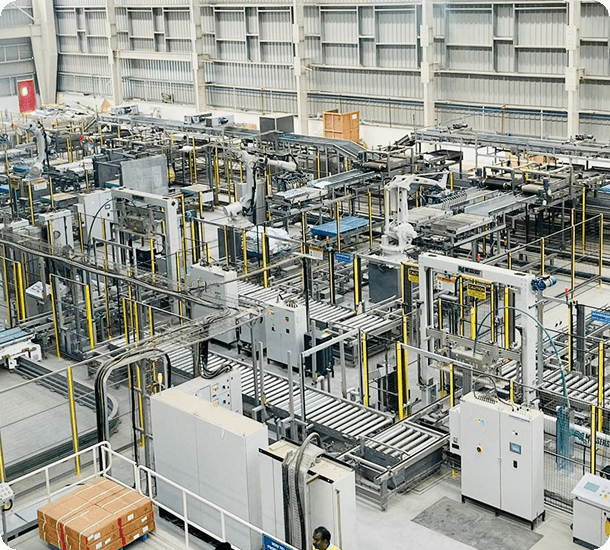
 Around the world, labour availability remains inconsistent. Developed economies are aging, emerging markets face seasonal volatility and specialized warehouse skills are increasingly difficult to retain. As a result, robotics has shifted from cost optimization to workforce stabilization.
From palletizing arms to autonomous mobile robots and high-speed shuttles, robotics now plays a dual role — elevating productivity while protecting operations from workforce disruptions. What makes this shift significant is not the replacement of human labour but the reallocation of human effort toward tasks that require judgement, coordination and problem-solving.
As warehouses aim to maintain performance in unpredictable environments, robotics is becoming one of the most reliable levers of resilience.

Historically, warehouses ran on periodic reports and manual updates. Today, businesses expect real-time answers:
Where is every SKU? Which batches are nearing expiry? What demand spikes are emerging? What maintenance risks lie ahead?
This expectation is driving the global rise of connected devices, sensors, digital twins and advanced warehouse management systems that integrate data across the floor. Warehouses capable of interpreting their own operations — instantaneously — are rapidly outperforming those that rely on delayed visibility.
The move from descriptive analytics to predictive and prescriptive intelligence marks a pivotal shift. Warehouses are no longer controlled solely through process — they are governed through insight.
Consumer behaviour has rewritten the fundamentals of fulfillment.
E-grocery, direct-to-consumer brands, pharmaceutical distribution and quick-commerce ecosystems have created an environment where delivery speed is tightly linked to loyalty and revenue.
This is pushing warehouses toward systems designed for rapid throughput:
In many organizations, speed has become the primary KPI — not because customers demand instant gratification but because competitive landscapes leave no room for slow operations.
Speed is not a luxury; it is now part of the product.

A decade ago, many warehouses automated selectively — a conveyor here, a sorter there, a semi-digital inventory process elsewhere. That era is ending. Global leaders are moving toward orchestrated ecosystems where storage, movement, picking, sorting and intelligence operate as one cohesive flow.
The motivations are clear:
Interoperability reduces complexity, unified control improves reliability, and end-to-end automation creates scalability. Businesses increasingly prefer a single integrated blueprint rather than fragmented, device-level automation.
This shift is elevating automation partners who can deliver unified systems — from the design phase to lifecycle support. In the coming decade, connectedness will matter more than individual components.
Environmental priorities have entered boardrooms and supply chain strategies with unprecedented weight. Across geographies, energy regulations, emissions targets and responsible purchasing standards are reshaping how warehouses are built and operated.
Sustainability in intralogistics is no longer about checklists. It is about intelligent design:
As energy costs rise and industries move toward more climate-conscious procurement, sustainable warehousing will increasingly influence partner selection and investment decisions. For many organizations, sustainability is now a driver of innovation rather than a compliance burden.
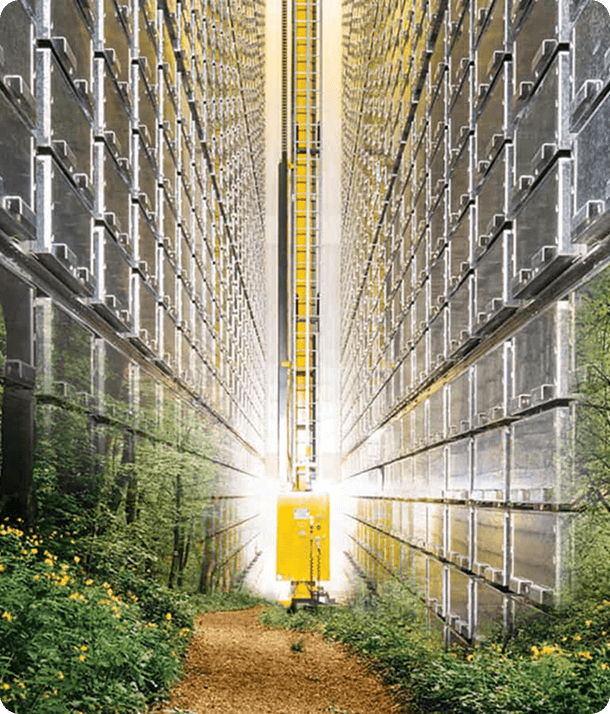
For years, supply chains optimized for cost and lean operations. But the disruptions of the past decade — pandemics, geopolitical conflicts, material shortages and transport volatility — have reshaped executive priorities.
Today, resilience holds greater weight than pure efficiency.





This shift is structural, not temporary. The most future-ready organizations are building warehouses that maintain performance even when external variables become unpredictable.
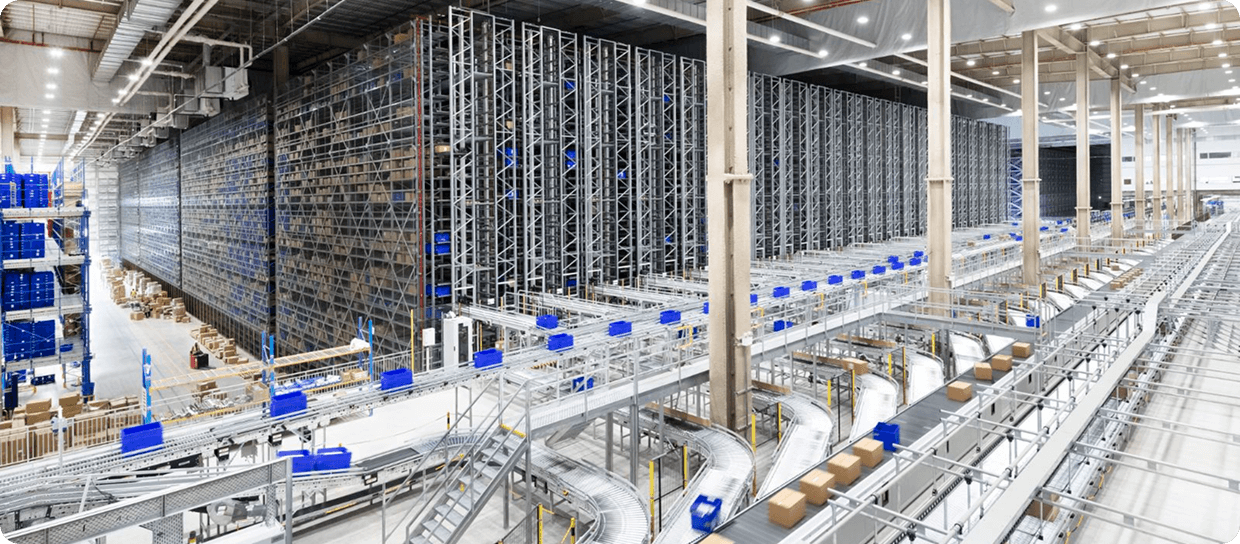
As these global shifts reshape intralogistics, one truth stands out: the future will reward warehouses built on intelligence, integration and adaptability. But translating these shifts into real operational advantage requires more than technology — it demands architectural thinking, multidisciplinary engineering and the ability to orchestrate entire ecosystems with precision.
This is where Armstrong Dematic has quietly shaped a distinct position in the industry. Over the last 26 years, the company has earned its place in high-throughput environments by doing what many find difficult: designing automation that holds its performance at scale. From multi-level storage systems to enterprise-wide sortation, from robotics to real-time control software, Armstrong Dematic brings together capabilities that most organizations seek but few can unify.
Its strength is not in one solution, but in building harmony across many — integrating machines, data, movement and intelligence into a single operational rhythm. For customers, this means fewer silos, faster deployments and systems that continue to deliver value long after installation.
As businesses plan for the decade ahead, the real differentiator will be partners who can help them navigate complexity and convert ambition into resilient, future-ready infrastructure. Armstrong Dematic stands at that intersection — engineering warehouses that don’t just keep up with global shifts but are purpose-built to lead through them.

As the glow of Diwali lights up every street, it also ignites a frenzy behind the scenes — warehouses running

Efficient supply chain management is the pillar of any successful business. It ensures timely delivery, decreases costs, and maintains customer...

The demands of omni-channel distribution center and order fulfillment are driving the adoption of more advanced put-to-light hardware and software....

To provide operational excellence, Armstrong Dematic leads the way towards innovative intralogistics and warehouse automation solutions. Our transformations are based on Industry 4.0 solutions.
Follow us on:


